

Eating for Alignment: Why You Know What to Eat But Still Struggle to Do It
Understanding the physical and non-physical side of your relationship with food

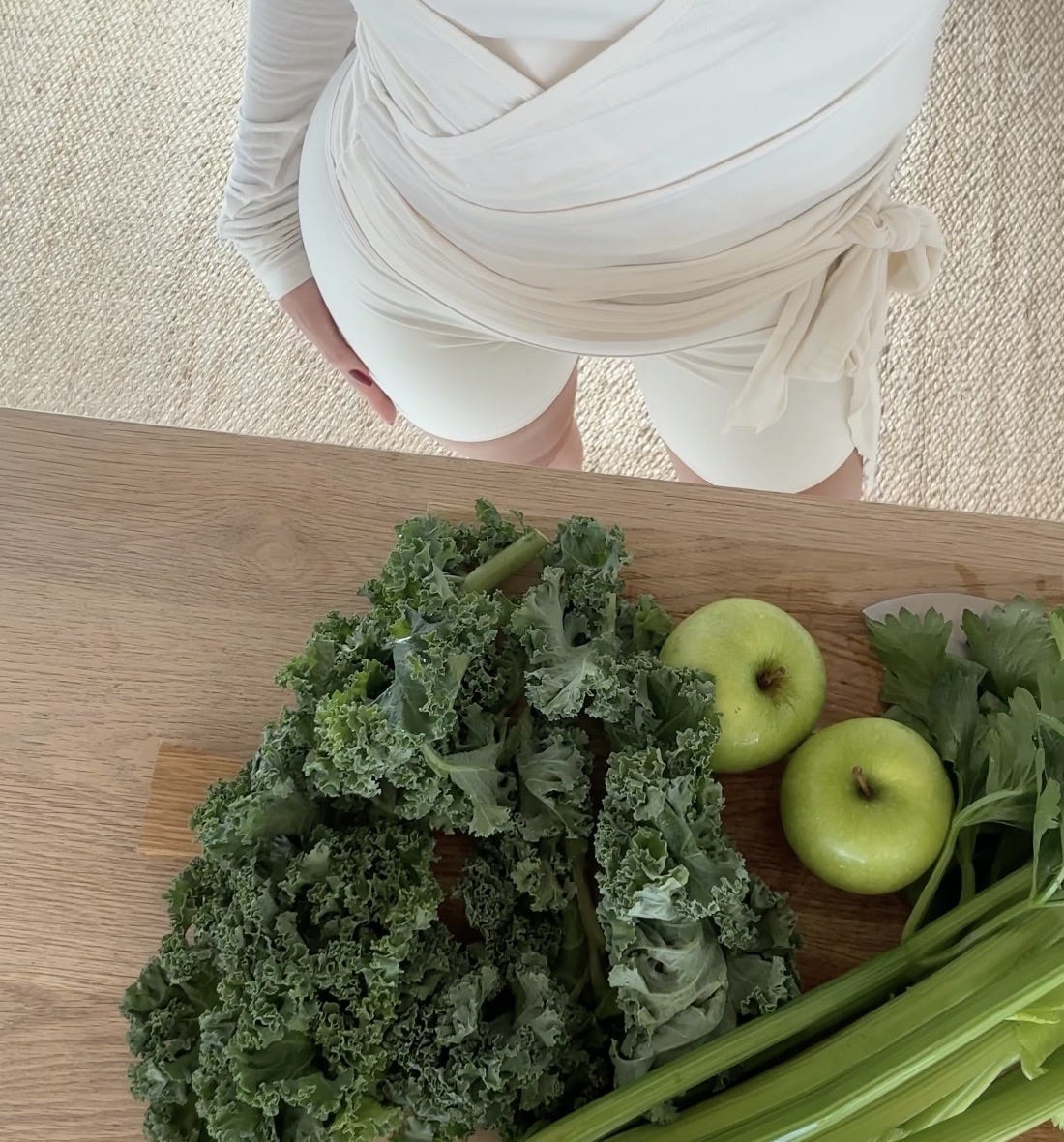
Today’s article is written by our guest contributor Kerri Mitchell, who shares her perspective on how stress, nervous system health and energy shifts shape our relationship with food.
We’re very excited to welcome her voice into this space and truly grateful for the insights and experiences she brings to our community.
We hope her words inspire you, and help you see your own journey through a new lens.
— The Soft CEO Club
For years, we’ve been taught that healthy eating comes down to willpower, discipline and choosing the “right” foods. Yet many people know exactly what they should eat and still struggle with cravings, emotional eating, inconsistency or feeling disconnected from their body’s signals.
Most people don’t struggle because they lack information. They struggle because information alone doesn’t create behavior change.
For example, someone may know:
✔ How many calories they need
✔ How to build a balanced meal
✔ What foods help them feel their best
Yet still struggle to follow through because they’re exhausted, emotionally drained, overly restrictive or trying to rely on willpower alone.
It’s called the knowing-doing gap. The knowing–doing gap is the space between knowing what would help you and actually doing it consistently.
I wasted so much time believing my metabolism was “broken.”
I was running 5-6 days a week. I had eliminated meat and dairy from my diet. I tracked calories carefully to make sure I wasn’t eating “too much.” From the outside, it looked like I was doing everything right.
Yes, I had three children by that point. But I wasn’t ready to accept that feeling this way was simply part of getting older.
At 38, I felt bloated, puffy, exhausted and disconnected from my body. I didn’t feel like myself. I was frustrated that despite all of my effort, I wasn’t seeing the results I expected.
The hardest part wasn’t that I didn’t know what to do. It was that I couldn’t stick to the things I thought I had to be doing. And much of the advice about health out there is if you are not getting results, you are not doing enough.
Looking back, I can see that I was focused entirely on the physical side of change. I was trying to control my body through food and exercise, while completely overlooking the role that stress, nervous system regulation and my relationship with myself were playing in the process.
But if you looked under the surface of my everyday life, there was constant stress, pressure and a lot of rushing.
Yes, healthy eating is good for you—but not if you’re restricting yourself so much that you can’t savor the joy of a dinner out, relax at a friend’s house and enjoy what they’ve prepared or share dessert with your children without guilt.
Yes, exercise is good for you—but not if you’re running yourself into the ground, ignoring your body’s signals or forcing workouts on an empty stomach simply to burn more calories.
Health was never meant to become another source of stress and our minds are trained to avoid stress at all costs. Stress causes us to shut down, our body goes into survival mode and puts on hold the unfolding of our truest selves because all the signals we are giving are interpreted as unsafe.
True wellness isn’t found in perfection, restriction or constantly trying to earn your food. It’s found in creating habits that support your body while still allowing you to fully participate in your life.
The healthiest version of you is not the one who controls every bite or never misses a workout. It’s the one who can nourish herself consistently, move her body with respect, enjoy meaningful experiences around food and trust herself to return to her habits without guilt or punishment.
That’s the difference between forcing healthy behaviors and becoming aligned with them.
When we begin addressing stress, emotional overwhelm and chronic survival mode, our relationship with food often shifts naturally.
The Two Sides of the Process
What I’ve found is that lasting behavior change (especially when it comes to food) requires two important components.
Whether your goal is to lose weight, improve your blood work, reduce chronic inflammation, set yourself up for longevity, increase your energy or simply feel more comfortable in your body, there is both a physical and a non-physical side to the process.
The physical side includes the habits and behaviors we often focus on: meal planning, eating balanced meals, creating exercise routines and building consistency. These are definitely important for lasting change, however, this is where people tend to double down thinking this is the only way to get the body or feeling we want.
The non-physical side is what I think of as energy alignment; our thoughts, beliefs, emotions, identity and the vision we hold for ourselves. It’s the internal experience that shapes how we show up for our habits each day.
What makes these two approaches so powerful is that both influence the nervous system. Consistent habits create a sense of predictability and safety in the body. Alignment practices, such as visualization, future-casting and cultivating supportive beliefs, can reduce internal resistance and help us feel emotionally connected to where we’re headed.
When physical habits and energy alignment work together, healthy choices often become less of a struggle and more of a natural expression of the person we’re becoming.
The Nervous System’s Hidden Role in Eating Habits
Our nervous system constantly scans our environment for safety.
When we’re stressed, overwhelmed, rushing from task to task or emotionally depleted, the body prioritizes survival over optimal digestion and long-term health behaviors.
This can show up as:
Intense cravings for sugar or highly processed foods
Mindless snacking
Emotional eating
Feeling “out of control” around food
Digestive discomfort
Difficulty recognizing hunger and fullness cues
These responses aren’t signs of failure. They’re often signs that the body is attempting to meet a need for comfort, energy or regulation.
The Physical Side
We are coming to accept that our world is constant stimulation and we lose the aspect of slowing down, being with ourselves and listening to our body’s signals of what it needs and what works.
In the physical realm this looks like understanding a healthy range of calories that works for your body, following predictable meal schedules throughout the week (even if that feels boring), making room for intentional flexibility moments and having an exercise regimen that gets your heart rate up but leaves you motivated, not depleted.
The more predictable your food habits become and knowing how the food you eat can support your body, the more your body can lean into its most relaxed self and then health becomes inevitable.
Using tools such as meal plans, calorie ranges, a sustainable resistance training and cardio routine are all great ways to support your nervous system if used correctly and not as a form of punishment.
Instead of using a meal plan as a rigid structure of rules you are trying to get to the end of, use it to be able to support the person you are becoming with foods you look forward to, spaced evenly throughout the day with room for joy in between.
Think of healthy discipline as another form of self love.
These physical practices I’ve mentioned help regulate the nervous system by slowing the mind down, reducing decision fatigue and creating more opportunities for success.
Predictability = Safety
The nervous system loves predictability.
When your body learns that food is coming consistently, there’s less urgency around eating. You’re no longer wondering:
“When will I eat next?”
“Can I have this?”
“Should I save calories for later?”The body begins to trust that nourishment is available.
Stable Energy = Calmer Cravings
Going too long without eating can increase hunger, irritability and the desire for quick-energy foods. Balanced meals and snacks help support more stable energy throughout the day, making it easier to make intentional choices rather than reactive ones.
Consistency over Perfection
It’s built on returning to your next meal or snack without guilt. If lunch wasn’t ideal, there is another opportunity to nourish yourself in a few hours. There is no need to “start over Monday” or compensate.
The Non-Physical Side
In the non-physical realm, practices that help regulate our energy and raise us up to the next best version makes sticking to those physical plans we have put in place easier.
If we have now practiced a vision of ourselves healthy, vibrant, tons of energy; we will naturally recognize the foods that give us those feelings. We may not always choose that option, but we know which foods bring us closer to how we want to feel at that level.
Important shifts for the non-physical side of health:
Stop focusing on the problem.
The more attention you give to unwanted weight, frustration, inflammation, chronic disease or dissatisfaction with your body, the more emotionally connected you become to that experience. I’m not saying ignore it completely that you are in denial, but the focus has to be on the way you are improving it, not the fact that you are in this situation
Focus on how you want to feel.
Instead of obsessing over a number on the scale, focus on feelings such as freedom, vitality, confidence, ease and well-being. Manifest the feeling, not the thing.
Become a vibrational match to your desired self.
You don’t wait until you lose weight to feel good. You begin practicing the emotions of the healthy, energized version of yourself now.
Release resistance around food.
Guilt, fear and obsession around eating create resistance. The goal is to cultivate a more relaxed and trusting relationship with food.
Visualize your future self.
Rather than constantly monitoring what is wrong, spend time imagining yourself moving, eating and living as the version of you who already feels healthy and aligned.
Now this is the part about health that is not so often talked about because it seems hard to measure, but I’ve found it to be imperative to finding lasting wellness while enjoying the process along the way.
It’s also easy to just say to do these things but if you are not used to shifting your mindset, it may seem overwhelming in the beginning. Just know that with these practices, you can create alternative neuropathways to make your default thinking more in line with your goals.
Practices to Support Energy Alignment
I want to give a few practices that I find are most helpful in the non-physical side of health and embodying the person you want to become without the physical evidence.
New Self-Talk:
The way we speak to ourselves is our internal dialogue and if that internal dialogue is out of sync with who we really are inside, we are then out of alignment.
We are here to live our most vibrant lives and to grow and experience all things that will bring us to our highest self. If our self talk is not aligned with love, it is only keeping us stuck or bringing us down.
We have to make the new thought a little bit of a stretch from our current reality, but believable so our mind doesn’t completely shut it down as untrue.
“I’ll never lose this weight” ➡️ “My body naturally gravitates towards health and balance.”
“If I skip this workout, I’m a failure” ➡️ “I am grateful for my body’s ability to move and become stronger by the day.”
“If I don’t see results fast, it’s not working” ➡️ “Everyday, I’m moving closer to my ideal self.”
“I don’t know how to eat healthy” ➡️ “I’m curious what foods make me feel good but are also enjoyable, I am ready to explore this.”
When you step into the identity of the person you want to become, you begin to trust that what you’re creating is inevitable. The timeline no longer matters, and neither does the ‘rush’ to get there.
Let Yourself Off the Hook:
People feel a lot of guilt and shame for health problems and then they internalize those feelings. When really, these issues with weight, chronic disease and inflammation could have come from the body protecting you, a false view of how our bodies are meant to live or eating and movement habits that are generational.
Whatever the reason, trust that this reality is showing what you do not want and the pull to be vibrant and healthy is an opportunity to grow and learn what we are meant to learn. Once you release the guilt, it’s easier to align with the next version of you.
Future-Casting:
At night, right before you go to sleep, think about two things.
Recognize a few pieces of evidence that prove you are ‘watching it happen’ within your day. Did you feel better? Have less inflammation? Make a healthier lunch choice automatically? Whatever it is, log that evidence away as watching this play out in your life as opposed to just waiting for the day it’s all going to ‘click’ miraculously. There is a difference between watching and waiting. Waiting signals that you know you don’t have what you want yet and you are in a passive state waiting for it to come. Watching signals that you know it is coming and you are recognizing the evidence throughout the day, so your mind has no choice but to prove it to you.
Feel the feeling of the future self that you want to be and know is in you. Are you full of energy? Are you relaxed in a social event around food? Feel what it would be like to occupy that space. The more you practice that, the more your mind will make choices based on that feeling.
Bringing It All Together
If you’d like to explore this further, in my newsletter When We Eat Plants, I write about sustainable weight loss, romanticizing healthy eating, mindset shifts and practical day-in-the-life examples of how I encourage plant-forward eating and nervous system regulation in everyday life to support health and weight loss goals.
I truly believe that everyone deserves to feel good in their body, age gracefully and enjoy each day while nourishing themselves from the inside out.
A regulated nervous system doesn’t burn fat for you or create healthy biomarkers. What it does do is make it easier to hear your hunger cues, follow through on healthy habits, recover from setbacks faster and make decisions from intention rather than stress. When that happens consistently, health often becomes a natural outcome rather than a constant struggle.
AUTHOR BIO
Kerri Mitchell is the author of When We Eat Plants, a passion project dedicated to helping people eat and live for health in a more balanced and regulated way.
She is a mom of three, a cardiac registered nurse and a student of plant-based nutrition. Through her writing, she shares practical tips, mindset shifts, and everyday lifestyle strategies that help make healthy eating feel sustainable rather than restrictive.
Drawing from both her professional experience and real life as a busy working mom, Kerri explores how to balance work, family and self-care while creating lasting habits that support health, weight loss and overall well-being.
To read more of Kerri’s work, connect with her on Substack or subscribe to her newsletter below.
 | A guest post by
|
I enjoyed this a lot! Thank you for sharing
Raising consciousness through nourishment. I love this!